Climate Risks & Opportunities
Regulatory Climate Change Scenario Analysis
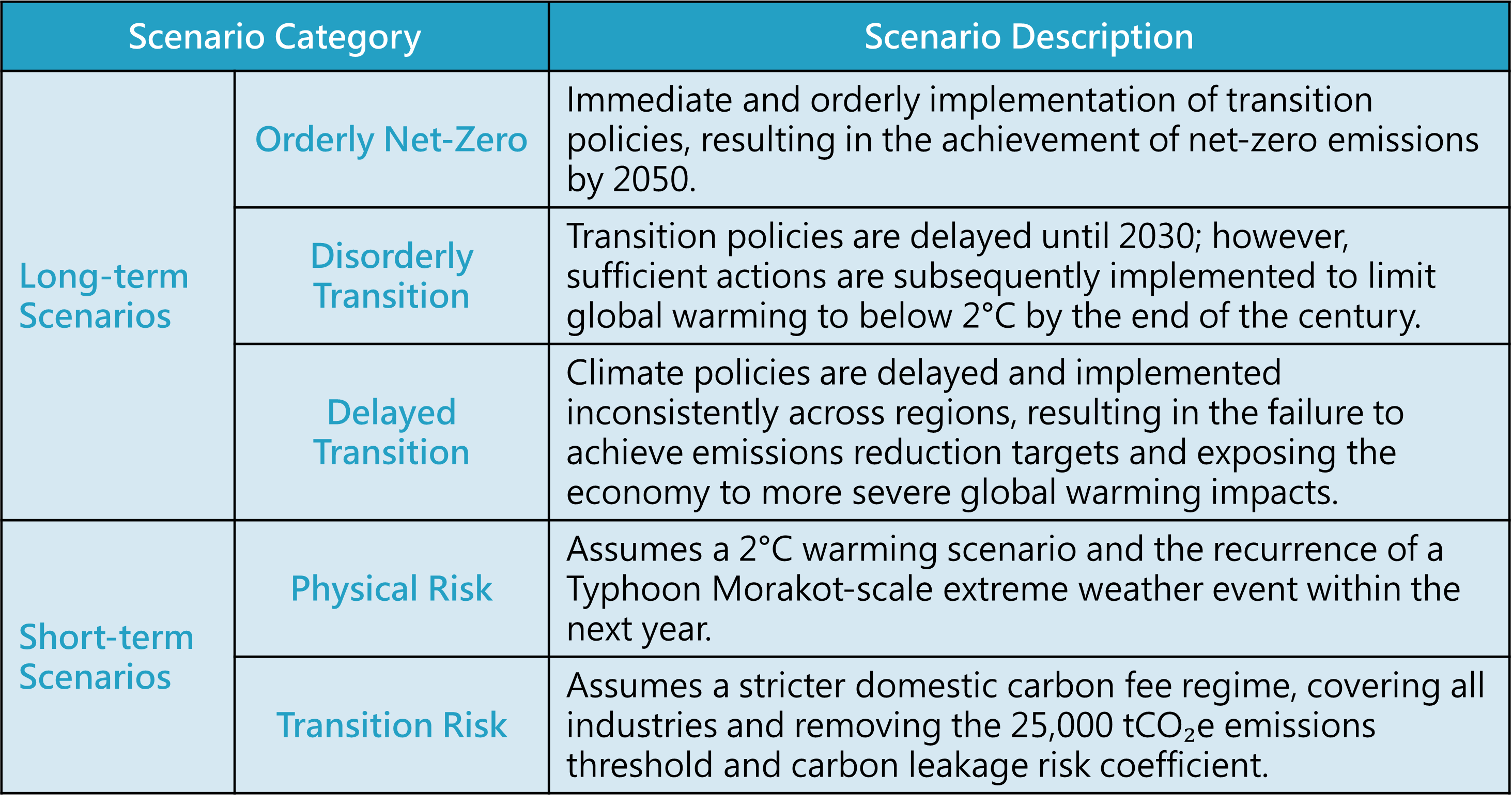
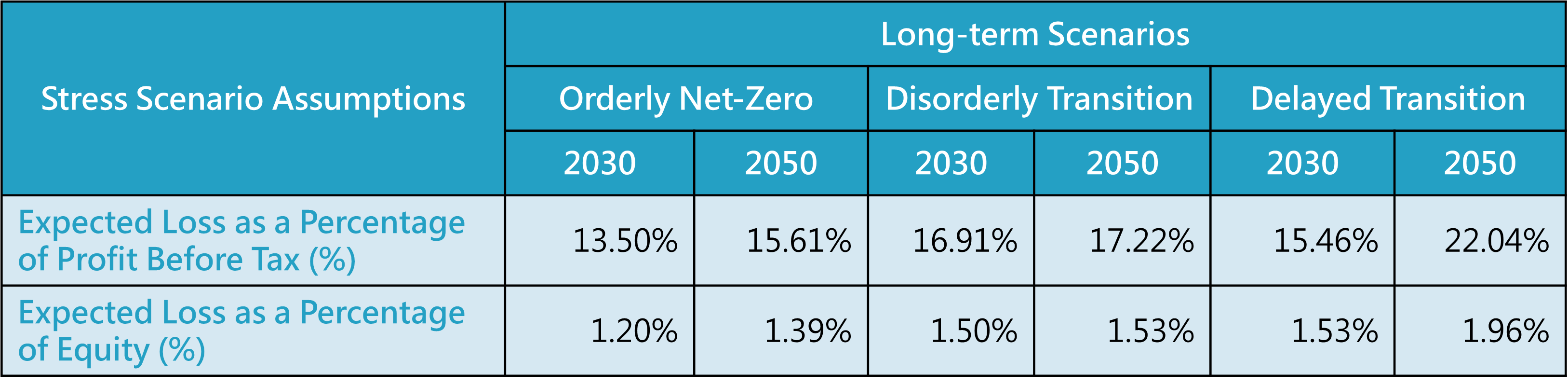
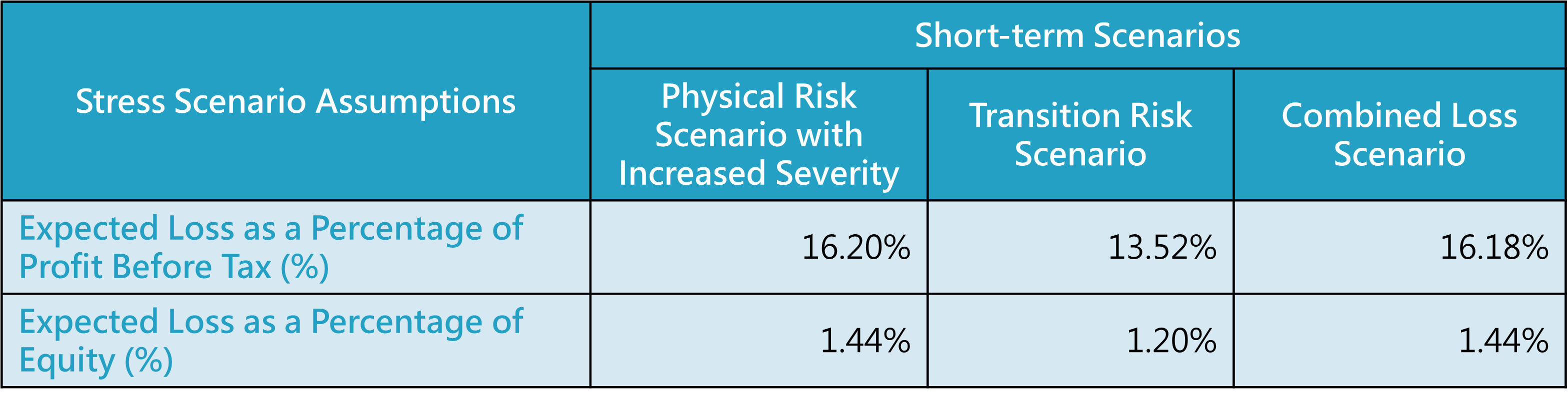
The Bank develops its climate stress scenarios in accordance with the Operational Guidelines for Climate Scenario Analysis for Domestic Banks. Taking into account Taiwan’s transition pathway and climate risk conditions, the Bank adopts both long-term and short-term stress scenarios with different time horizons. Long-term scenarios are assessed at two reference years, 2030 and 2050, while short-term scenarios evaluate the potential impacts of climate-related events occurring within the next year. The long-term scenarios comprise three pathways: Orderly Net-Zero, Disorderly Transition, and Delayed Transition. The short-term scenarios include Physical Risk and Transition Risk scenarios. Details of each scenario are described below.
Long-term Climate Scenario Analysis Results
Base Date: December 31, 2025
Note:
The short-term scenarios cover only domestic lending and investment exposures. In addition, due to methodological differences between the long-term and short-term scenario analyses, the results should not be directly compared.
2. As the long-term scenarios assess impacts over an extended time horizon, the estimated expected losses under each scenario are subject to a considerable degree of uncertainty and do not represent actual future outcomes. Accordingly, the results should be interpreted and applied with due consideration of their inherent limitations.
Short-term Climate Scenario Analysis Results
Base Date: December 31, 2025
Note:
The short-term scenario analysis covers only domestic lending and investment exposures. In addition, due to differences in the methodologies adopted for the long-term and short-term scenarios, the results are not directly comparable.
2. As the long-term scenarios assess impacts over an extended time horizon, the estimated expected losses under each scenario are subject to uncertainty and do not represent actual future outcomes. Therefore, the results should be interpreted and applied with due consideration of their inherent limitations.
Supplier Management
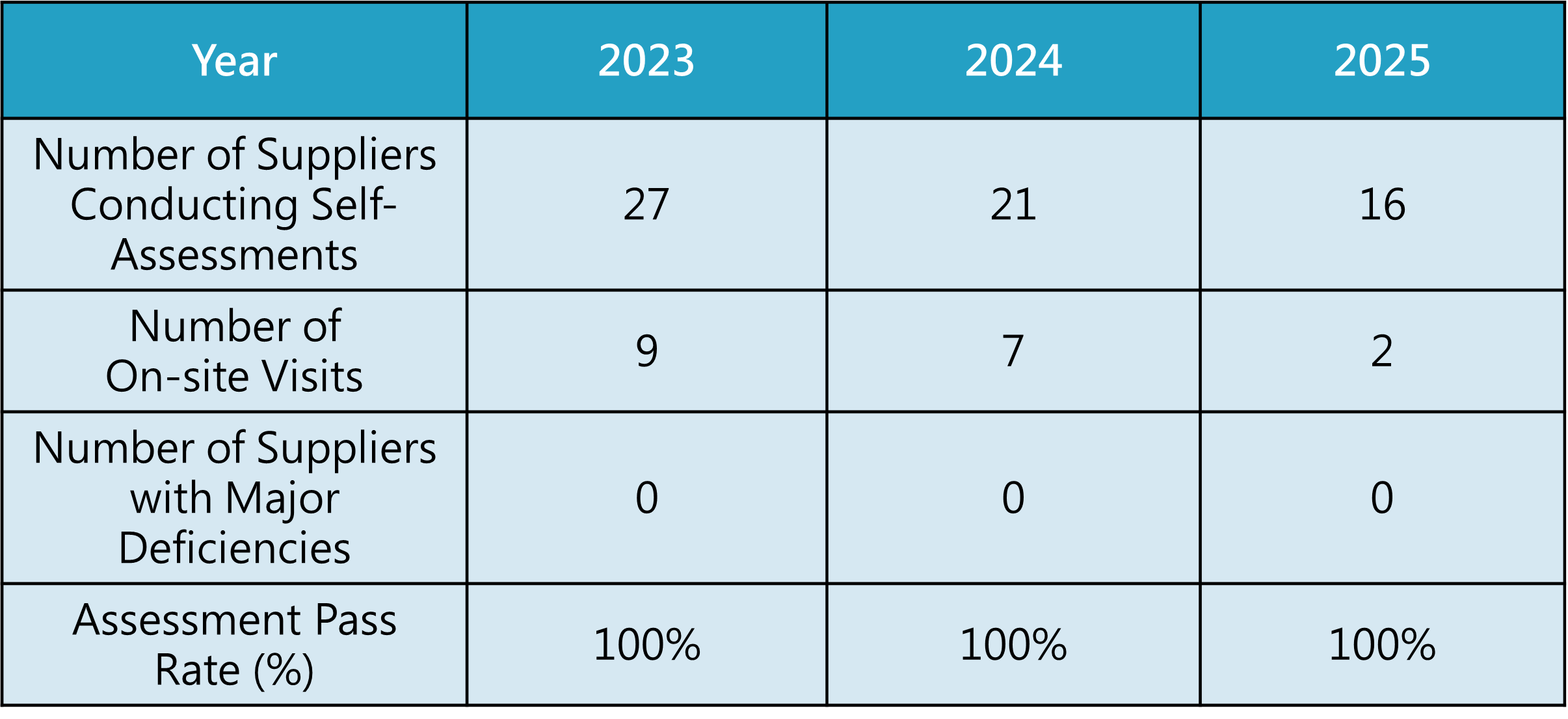
The Bank requires its suppliers to comply with the Supplier Sustainability Principles established by its parent company, SinoPac Financial Holdings, and to sign the Supplier Sustainability Commitment Letter. Suppliers are expected to uphold standards relating to human rights, non-discrimination, prohibition of child labor, occupational health and safety, environmental protection, green procurement, business ethics, and integrity. Through sustainable supply chain management, the Bank aims to foster balanced economic, social, and environmental development while advancing long-term sustainability goals.